PROXIMANOVA-LIGHT.OTF PROXIMANOVA-LIGHTIT.OTF PROXIMANOVA-EXTRABLD.OTF PROXIMANOVA-BOLD.OTFPROXIMANOVA-BLACK.OTF
Get this font in here!
This Article Applies to:
- AVG AntiVirus Business Edition
- AVG Internet Security Business Edition
- AVG File Server Business Edition
- AVG Email Server Business Edition
The component removal process mentioned in this article applies to unmanaged Antivirus. If you are using managed Antivirus, uninstall the components via your console.
A business environment has different needs than those of consumers. Therefore, certain Antivirus components are not recommended for use in such a network even though they may be included in your AVG Business subscription.
There are some components that we do not recommend installing on a server. Web
To exclude the components from new installations, use the Customize installation option during the installation process (see
For existing installations, you can use the Add/Modify Components option from the client's Troubleshooting section (see
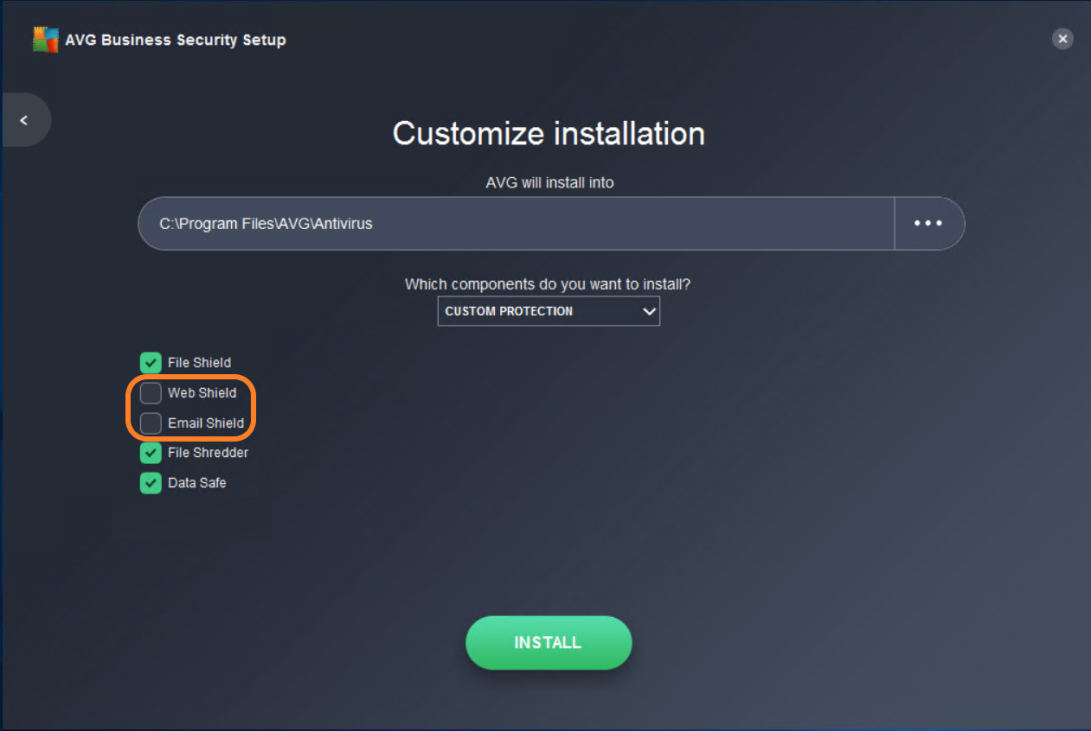
The other recommendations for the various types of servers vary, but in general you should allow only a few components to be active to avoid interfering with server processes. For optimal performance, the following types of servers should only have the suggested components enabled:
- File Server: File Shield
- Application Server: File Shield
- DNS Server: File Shield
- Email Server: Exchange component, File Shield
- Web Server: File Shield
- Terminal Server: File Shield
- SharePoint Server: SharePoint component, File Shield
For Exchange Server in particular, we recommend following these guidelines for installation of components and creation of exclusions:
- Installation — During the installation of your Exchange Server device:
- Do not install Web or Mail Shield
- Install the Exchange component
- Install File Shield
- Exclusions — Microsoft has compiled a list of recommended exclusions for Exchange Servers. However, when you create exclusions, do not use variables (such as
%localappdata%); instead, use Wildcards (such asc:\users\*\appdata\local\*). We recommend you review and implement the settings found in these Microsoft's articles:
Other Articles In This Section:
Backing Up and Restoring Customized Settings
Related Articles: